

Introduction
There is a specific moment in a small Canadian workshop when the desktop laser stops being the right tool. It is not the day it breaks. It is the day the order sheet includes a 4×8 sheet of plywood, or a batch of thirty cutting boards that all need the same engraving, or a client who wants a full-size sign rather than a set of coasters. The machine still works perfectly. It has simply run out of bed. That is the point where the question shifts from “which laser should I buy?” to “which laser can handle the work I am actually being asked to do?”
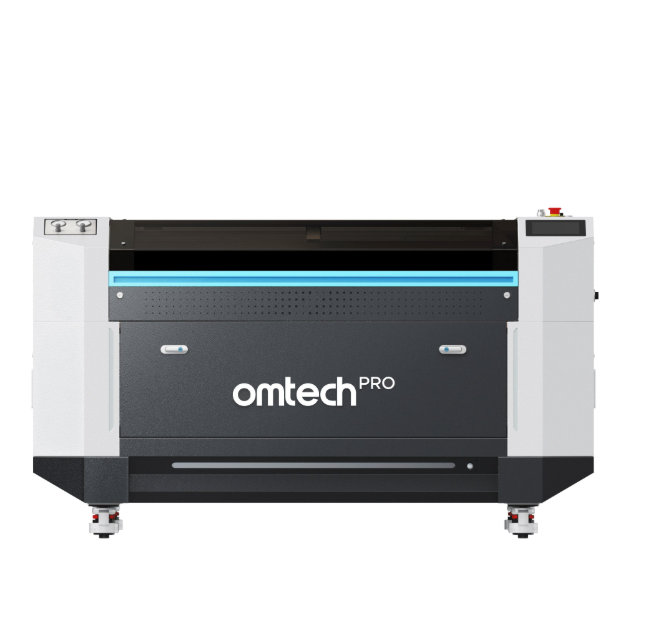
The answer for most shops at that stage is a bed size and power class that desktop machines do not reach. The OMTech Pro 2440 80W and 100W CO2 laser engraver sits in that category: a 2440×1220mm working area—roughly the size of a standard 4×8 sheet—with a choice of 80W or 100W tube, autofocus, and a built-in water chiller. The spec that matters most is not the wattage. It is the fact that a full sheet goes in without being cut down first, which changes the entire production flow for a shop making signs, furniture components, or large-format décor.
For Canadian buyers specifically, the logistics around a machine this size matter as much as the machine itself. A 2440mm bed is not a benchtop purchase. It needs a dedicated footprint, a power supply that can handle the load, and a plan for delivery and installation that accounts for a unit that will not fit through a standard door in one piece. This is why buying through a regional channel rather than a cross-border order is worth considering. OMTech Canada exists as a separate storefront for exactly this reason: pricing in Canadian dollars, shipping terms that reflect domestic delivery rather than international freight, and support that operates in the same time zone as the workshop. For a purchase at this level, those details are not administrative conveniences. They are the difference between a machine that arrives and starts working and one that sits in a crate waiting for a customs issue to resolve.
The 80W versus 100W decision is simpler than it looks. The 80W configuration handles the majority of wood, acrylic, and signage work that a small shop produces, with enough headroom for 1/2-inch plywood and most common engraving depths. The 100W version buys speed and thicker-material capability: faster cutting on the same jobs, and the ability to work through 3/4-inch hardwood or thicker acrylic without multiple passes. The right choice depends on the order mix. A shop doing mostly engraved signs and personalized wood products will rarely regret the 80W. A shop that regularly cuts thick material or runs production batches where time is the constraint will find the 100W pays for itself in throughput rather than in capability.
The autofocus and built-in chiller are the features that separate this class of machine from a larger version of a desktop laser. Autofocus removes the manual Z-height adjustment that becomes a genuine time cost when the bed is this large and the material thickness varies from job to job. A built-in chiller means the machine does not depend on an external cooling setup that has to be sized, plumbed, and monitored separately. These are not luxury features. They are the difference between a machine that a single operator can run efficiently and one that requires a second person just to manage the cooling and focus between jobs.
Final Thought
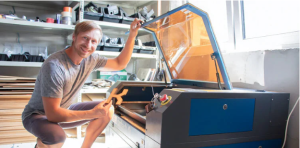
The broader point is that the OMTech laser engraver and cutter machines range is organized around production scale, not just around price. The Pro 2440 is not the entry point, and it is not meant to be. It is the machine that makes sense when the work has outgrown the desktop and the shop needs a bed that matches the material it is actually buying. For a Canadian workshop at that stage, the decision is less about which laser to buy and more about whether the next machine should be sized to the current order sheet or to the one that is already forming in the inbox. The Pro 2440 is built for the latter.
